Serving Redwood City, CA and surrounding areas. (650) 587-4237
Cracked, uneven, or aging front steps are a safety hazard and a poor first impression - we replace them with poured concrete built to last through Redwood City winters and wet-season clay soil movement.
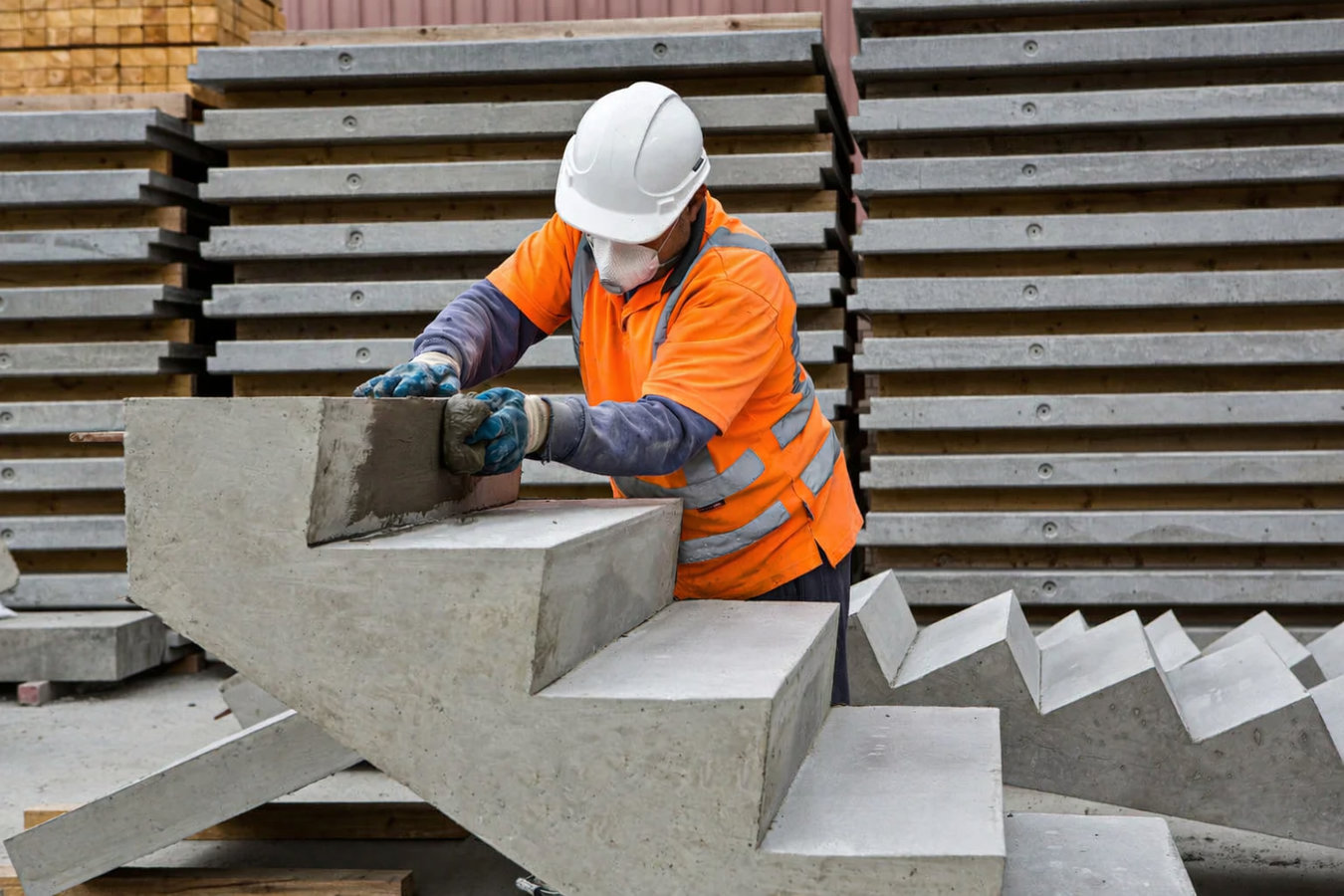
Concrete steps construction in Redwood City covers front entry step replacement or new step installation - the crew removes old steps, prepares a compacted gravel base to handle local soil conditions, builds temporary wooden forms, and pours the concrete in a single day, with most projects ready for light foot traffic within 48 hours.
A lot of Redwood City's homes were built in the 1940s through 1970s - and many still have their original front steps. Steps from that era were typically poured on uncompacted soil without the base work that current standards require. They can look intact on the surface while the foundation underneath has been slowly shifting for decades. If your steps rock when you step on them, tilt toward the street, or have cracks running all the way through a riser, those are signs the whole structure needs to be rebuilt - not just patched.
When a full exterior concrete project is in scope, our concrete sidewalk building service handles the walkway connecting your new steps to the street, so the finished entry is consistent from curb to door.
Surface cracks can sometimes be patched, but cracks that run all the way through a step - especially ones that have been growing over time - mean the base underneath has moved. In Redwood City, clay soil movement is a common cause: the ground swells in winter rain and shrinks in the dry season, which stresses any concrete sitting directly on it. Cracks at this stage are a replacement job, not a repair.
If a step moves when you stand on it, or if the surface no longer feels level underfoot, the base has settled or eroded beneath the concrete. An uneven step is one of the most common causes of trip-and-fall injuries at home, and it will not self-correct. The only fix is to remove the old concrete and rebuild from a properly prepared base.
Spalling is when the top layer of concrete starts to chip or peel away, leaving a rough, pitted surface. In Redwood City, this is common on steps from the 1950s and 1960s that have absorbed decades of moisture. A spalled surface is harder to clean, more slippery when wet, and a sign the concrete has reached the end of its useful life.
Well-built steps have a slight forward pitch so rainwater runs off. If you see puddles sitting on your steps after a storm, the slope has worn down or was never built correctly. Standing water during Redwood City's rainy season - November through March - accelerates surface deterioration and creates a slip hazard every time someone uses the entry.
Every project starts with an on-site estimate visit where we assess the existing steps, evaluate what is underneath, and confirm whether repair or full replacement is the right call. For most homes built before 1980 in Redwood City, replacement is what we recommend - not because it costs more, but because the base underneath those older steps rarely meets modern standards. Before we pour anything, we remove the old concrete, excavate for a compacted gravel base, and set up the forms that define the final shape, height, and pitch of each step.
We handle the City of Redwood City permit application and schedule the city inspection after the pour - you do not have to manage that process. For projects where the front entry also includes a walkway to the street, our concrete sidewalk building service can be paired with steps work for a single cohesive project. When the scope involves a larger structural base, we also offer slab foundation building as a complement for entries where the approach slab needs to be addressed alongside the steps themselves.
Best for homes with aging or cracked steps that need to be broken out and rebuilt from a properly prepared base - most common on Redwood City properties built before 1980.
For additions, remodels, or properties where a new entry approach needs to be built from the ground up with fresh excavation and base work.
Suited to homeowners who want a safe, practical entry surface that grips in wet weather - the most common and cost-effective finish for Redwood City front steps.
For homeowners who want a custom look that complements their home's exterior - stamped or colored concrete poured during the same process as a standard set of steps.
A significant share of Redwood City's housing stock was built in the decades following World War II. Homes from that era often still have their original concrete steps - structures that were poured directly on uncompacted soil without gravel base work, and that have been absorbing the stress of clay soil movement for 60 to 70 years. That clay soil is one of the defining ground conditions across the San Mateo Peninsula: it expands when it absorbs winter rain and shrinks back in the dry season, and that ongoing movement is the most common reason steps in this area crack, tilt, and eventually become unsafe. A replacement that does not address the base properly will end up in the same condition within a few years. The California Department of Conservation - Geologic Survey documents the expansive soil hazard across San Mateo County, and it is a genuine factor in how steps and other concrete structures need to be built here.
Permit compliance matters here too. The City of Redwood City requires a permit for front entry step construction, which means a city inspector reviews the finished work before the job is considered complete. Homeowners in neighborhoods like Redwood Shores and parts of Farm Hill also need HOA approval before exterior changes - including steps - can be started. We handle the permit process and can provide the documentation most HOAs need for their review. Homeowners in San Carlos and Belmont face the same soil conditions and permit requirements, and we serve both communities with the same process we use in Redwood City.
We respond within one business day and schedule a visit to look at your existing steps, assess the ground beneath them, and measure the space. You receive a written estimate - not just a verbal number - that covers demolition, base work, the pour, and permits.
We apply for the City of Redwood City building permit on your behalf before any work begins. Permit processing typically takes one to two weeks. If your home has an HOA, we provide the drawings and documentation the association needs to review the project.
The crew breaks out the old concrete and hauls it away, then excavates and compacts a gravel base suited to local soil conditions. Plan to use a back or side door on demolition day - the front entry will be off-limits. This base work is the most important part of a durable set of steps.
The pour and finishing typically happen in one day. After 24 to 48 hours you can use the steps lightly. The city inspector visits once the concrete has cured - we schedule that and coordinate it. After inspection, we walk through the finished work and explain the curing timeline and maintenance schedule.
Free on-site estimate. Written quote before any work begins. Permit handled for you.
(650) 587-4237On homes built before 1980 - a large share of Redwood City's housing stock - we probe the base before we quote a repair. If the structure underneath cannot be salvaged, we say so upfront. A contractor who quotes a patch on steps with a failed base is setting you up for the same problem two years from now.
The clay soils across San Mateo County expand and contract with seasonal moisture. We excavate and compact a gravel sub-base that absorbs that movement before it reaches the concrete. This is the single biggest factor in how long a set of steps lasts in this area - and it is included in every project we do here.
We pull the permit and coordinate the city inspection on every project. That inspection is a record that your steps were built to code - documentation that matters when you sell your home. Unpermitted structural work on a Redwood City property can slow or derail a real estate transaction.
Redwood City gets consistent rain from November through March. We finish every set of steps with a broom or textured surface so they grip underfoot when wet. The Portland Cement Association recommends textured finishes for outdoor steps specifically because a smooth surface becomes dangerously slippery in wet conditions - so this is simply the right way to build steps here.
These are not differentiators - they are the baseline for doing the job correctly in Redwood City. A properly assessed, base-prepared, permitted, and textured set of steps is one you will not have to think about for decades.
When the approach slab or landing area connected to your new steps also needs work, our slab foundation service handles the structural base from the ground up.
Learn MoreConnect your new front steps to the street with a matching concrete walkway - built with the same base prep and finish to create a unified entry from curb to door.
Learn MoreWe are booking projects now - beat the fall rain season and get your new steps in place before November storms arrive.